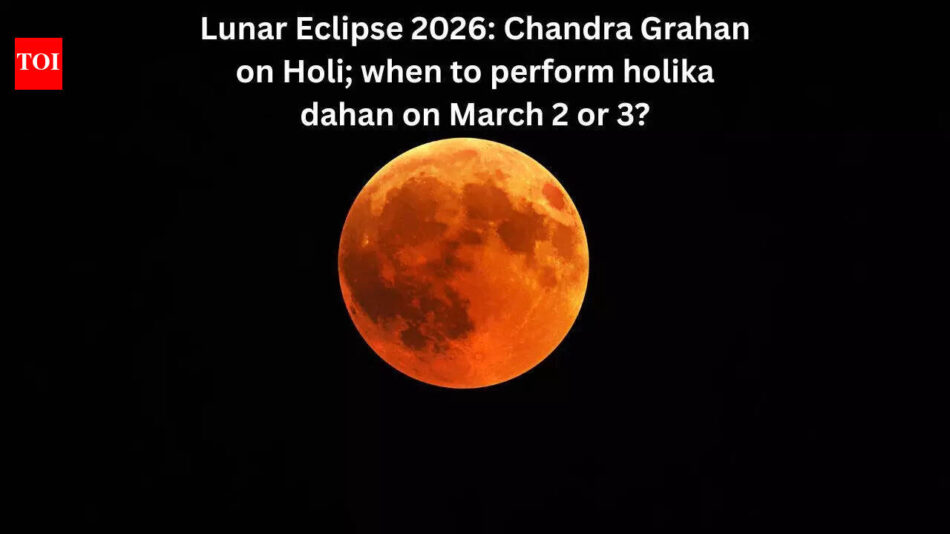
Lunar Eclipse 2026: Chandra Grahan on Holi; When to Perform Holika Dahan on March 2 or 3?
- The Lunar Eclipse on March 3, 2026, coincides with Holi, creating a unique celestial event.
- Holika Dahan should be performed on March 2 before Bhadra Kaal begins.
- Understanding Sutak Kaal is essential for planning Holika Dahan rituals.
- Post-eclipse celebrations can enhance the spiritual significance of Holi.
The year 2026 will witness a remarkable Lunar Eclipse on March 3, coinciding with the vibrant festival of Holi. This rare occurrence has raised questions regarding the auspicious timing for Holika Dahan, a significant ritual associated with Holi.
As devotees prepare for this festival, understanding the implications of the eclipse and the associated timings is crucial for ensuring the rituals are performed correctly and with the appropriate reverence.
Continue Reading
The Significance of Holi and Holika Dahan
Holi, known as the festival of colors, symbolizes the victory of good over evil and the arrival of spring. Holika Dahan, the ritual of burning the Holika effigy, is performed the night before Holi, representing the destruction of evil. The timing of this ritual is traditionally guided by astrological phenomena, making the upcoming Lunar Eclipse particularly significant.
Lunar Eclipse Details
The Chandra Grahan on March 3, 2026, will begin at 06:23 AM. This event is expected to attract the attention of astronomers and spiritual seekers alike. However, the eclipse is also associated with the Sutak Kaal, a period considered inauspicious for performing rituals.
Understanding Bhadra Kaal
Bhadra Kaal is another important consideration for the timing of Holika Dahan. This period will commence on March 2, 2026, at 05:58 PM and will last until 05:30 AM on March 3. During this time, it is traditionally advised to refrain from performing any auspicious activities, including Holika Dahan.
Optimal Timing for Holika Dahan
Given the astrological events, the most auspicious time for Holika Dahan will be:
- Before Bhadra Kaal on March 2, 2026, ideally before 05:58 PM.
- After the Lunar Eclipse ends on March 3, 2026, specifically after the Sutak Kaal concludes.
Thus, the ideal time for Holika Dahan would be after 06:23 AM on March 3, when the eclipse has ended and the Sutak period is over.
Celebrating Holi
Following the completion of Holika Dahan, the festival of colors, known as Dhulendi or Rang Wali Holi, will be celebrated on March 4, 2026. This day is marked by joyful gatherings, throwing of colors, and various festivities that symbolize love and unity.
Spiritual Practices During the Eclipse
During the Lunar Eclipse, many people engage in spiritual practices such as meditation and prayer. It is believed that this time is potent for introspection and seeking blessings. Here are some recommended practices:
- Reciting mantras and prayers to invoke peace and prosperity.
- Engaging in meditation to enhance spiritual awareness.
- Performing charitable acts as a way to accumulate positive karma.
Conclusion
The Lunar Eclipse on Holi 2026 presents a unique opportunity for spiritual reflection and celebration. Understanding the timings of Bhadra Kaal and Sutak Kaal is crucial for performing Holika Dahan correctly. By aligning these rituals with astrological events, devotees can enhance the spiritual significance of their celebrations.
Note: Provide a strategic conclusion reinforcing long-term business impact and keyword relevance.
Frequently Asked Questions
The Lunar Eclipse will occur on March 3, 2026, starting at 06:23 AM.
Bhadra Kaal is an inauspicious time that starts on March 2, 2026, at 05:58 PM and lasts until 05:30 AM on March 3, making it unsuitable for Holika Dahan.
Holika Dahan should be performed after the Lunar Eclipse on March 3, 2026, specifically after 06:23 AM when the Sutak Kaal ends.